

Welcome to Part 4 of a little series I’m doing on protein:
Part 1: What is it and how much are we aiming for? (click to read!)
Part 2: What kind? Plant vs Animal and Protein Powders (click to read!)
Part 3: The Protein Effect: Appetite, Mood, Muscles and Aging Well (click to read!)
Part 4: The Practicalities: Overcoming common barriers plus tips to getting it in AND absorbing it
Part 4: The Practicalities: Overcoming common barriers plus tips to getting it in AND absorbing it
PRACTICALITIES - how are we eating this much protein?!
It’s all well and good to say you want to eat x amount of protein - but let’s be practical, there is a lot to consider and some real barriers. For example:
Cost - animal protein is expensive! Quality protein powder is also expensive. Things like tofu and legumes are more affordable, however you sometimes you need to eat a lot more (lentils, beans etc) if those are your only sources. We eat animal protein daily in my house - however I’ve found having a mix of plant and animal protein (think a chicken dish with a side of hummus or a chilli with beef and black beans) works best for us in terms of budget and nutrient diversity.
Feels like too much - if you aren’t used to eating much protein, 30g in one meal can feel like a lot. Build up slowly. Experiment with different types of protein and tune into how your body feels, and how your appetite is in the next few hours. Are you feeling satisfied and energised?
We are not aiming for a post-Christmas dinner stuffed feeling! If you increase your protein serving - be sure to adjust other components of your meal (always including plenty of veg/fruit!) to avoid overeating.
Environment/animal welfare - This will be a personal decision for you as there is a lot to weigh up. Looking into where your animal protein is sourced and how the animals are treated can help you become more informed. If you decide to limit/exclude animal protein, be mindful to include some complete plant proteins (containing all the essential amino acids) every day such as tofu and edamame.
My best tips for reaching your protein goals:
If you like pasta - try some of the legume pastas available such as chickpea pasta or lentil pasta for extra protein, I’ve also seen edamame pasta available. These alternatives are usually gluten free! Sometimes they are called ‘protein pasta’.
Whisk an egg into your porridge while it cooks (if you’re making it on the hob). It doesn’t change the taste, just makes it slightly creamier. Whisk fast or you’ll have scrambled egg in there!
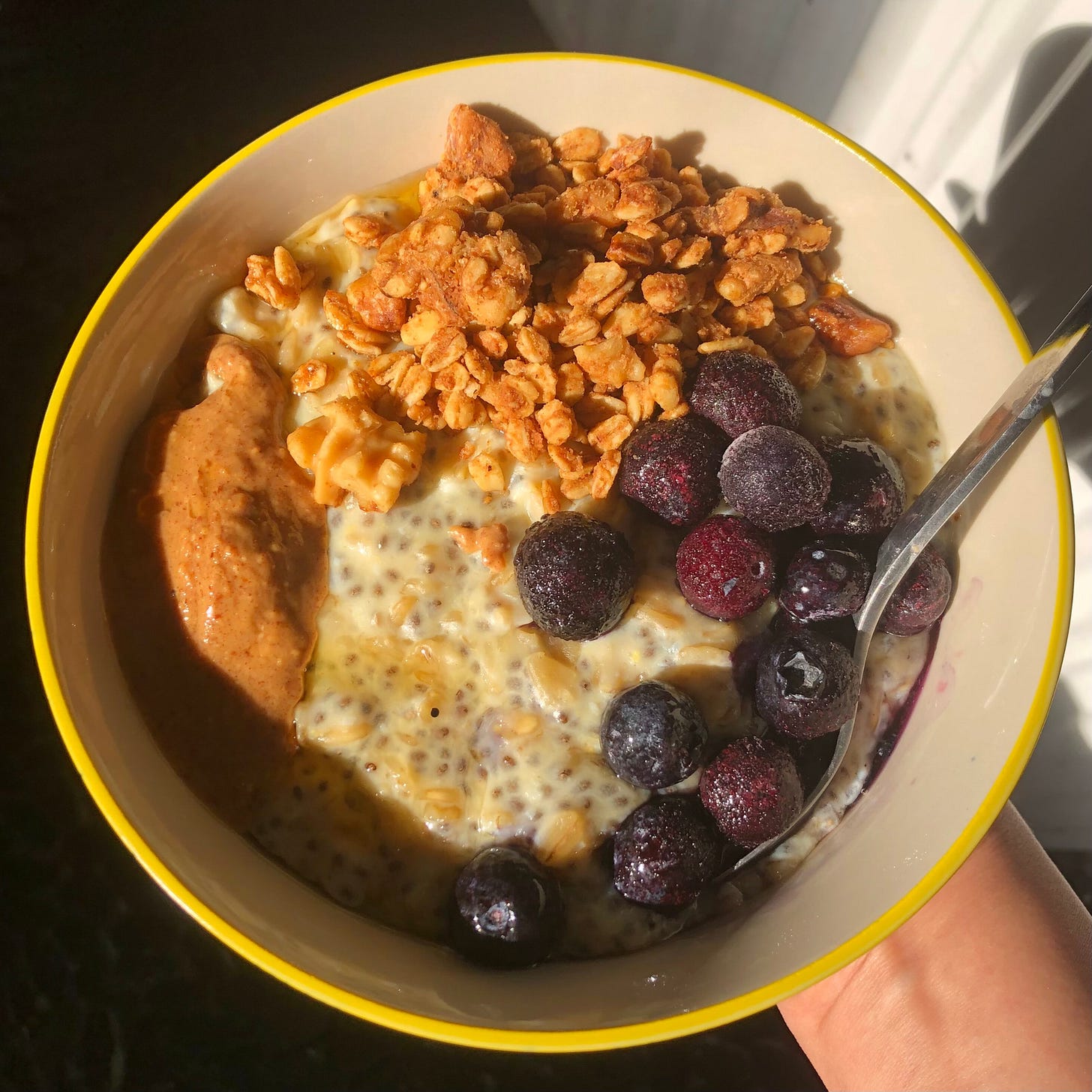
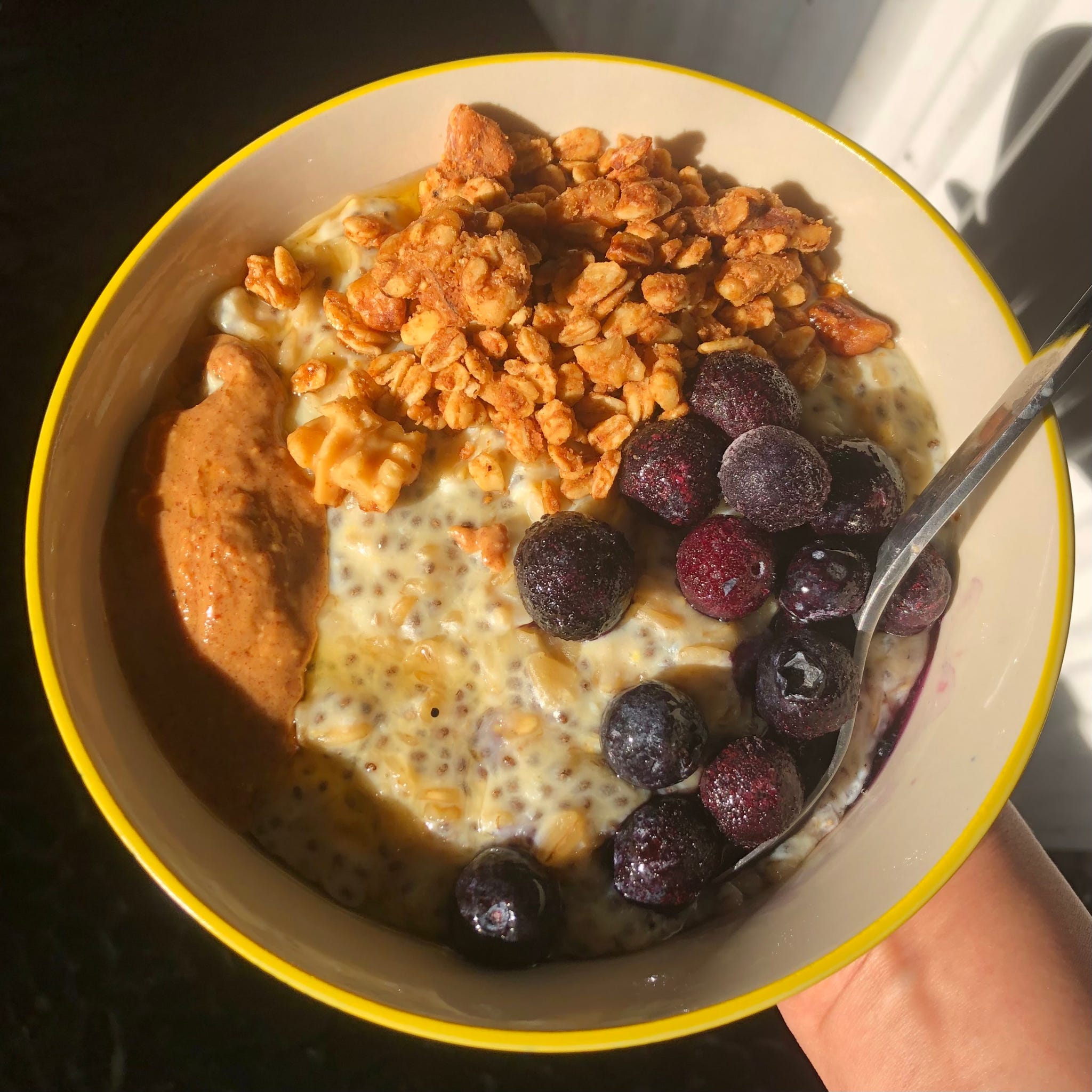
Here is one I make sometimes - I added some collagen and chia seeds while cooking and topped with blueberries, a bit of granola and almond butter
Have prepped protein in the fridge - we roast a chicken once a week just for the fridge, great for quick lunches or part of a snack. We also often do some kind of pulled meat in the slow cooker every other week. Boiled eggs, prepped egg salad, tuna mayo, hummus, edamame beans are other great fridge choices.
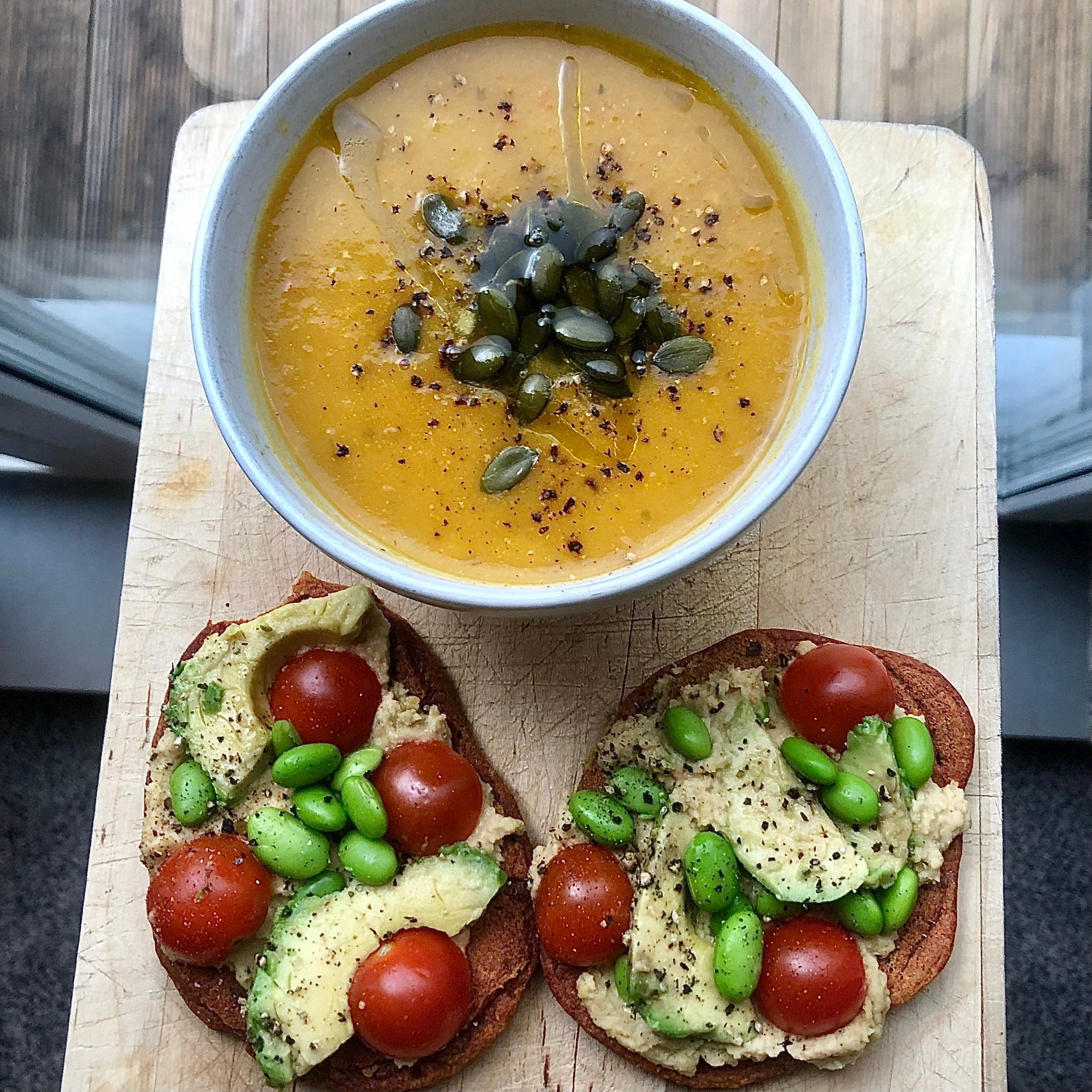
Top salads or soups with seeds.
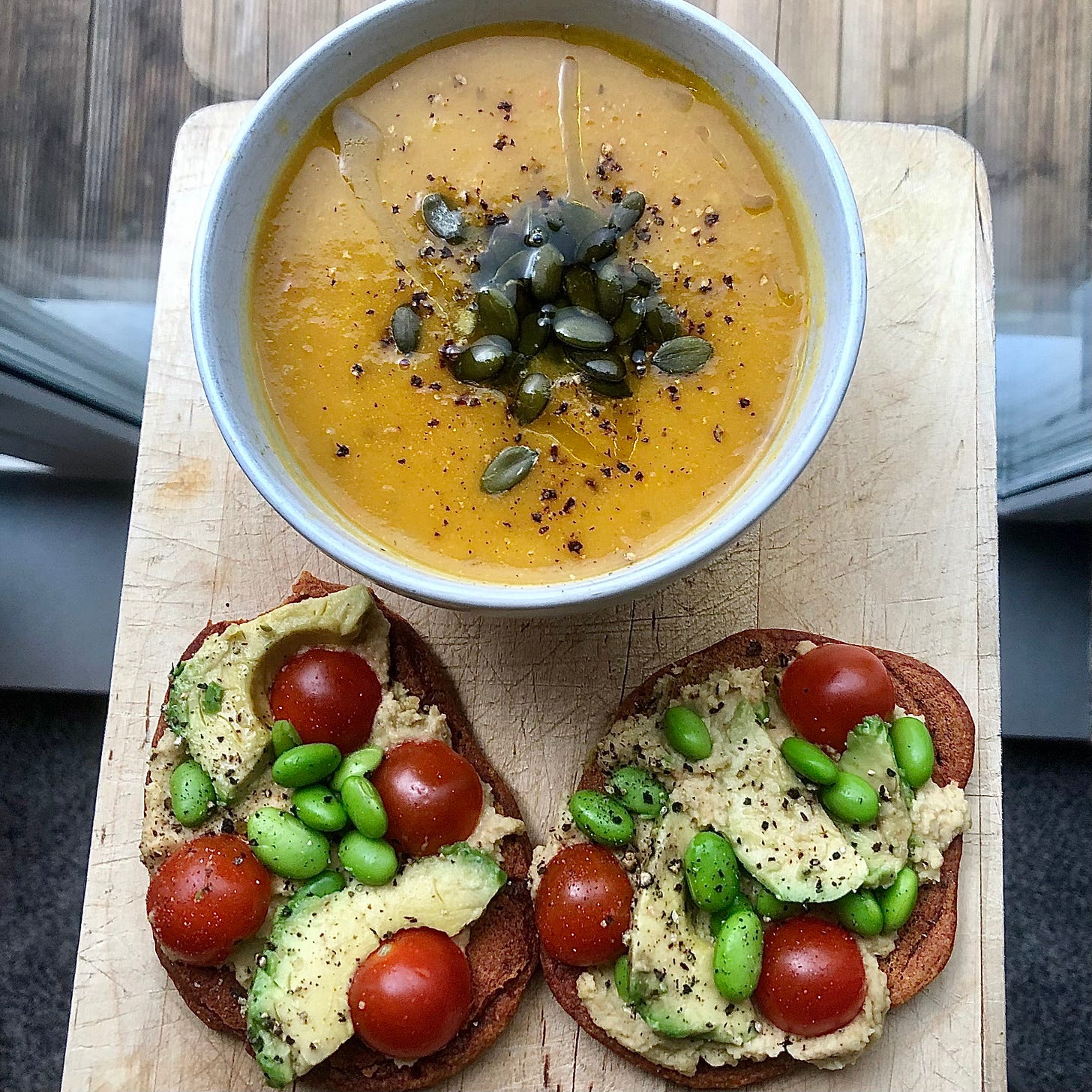
This is a carrot and ginger turmeric soup I made topped with pumpkin seeds and a side of buckwheat turmeric flatbreads with edamame beans:ption. Not to be an ‘almond mum’ about it, but almonds actually have an impressive protein count - a handful of 20 has about 6g (same as an egg)
Snack on edamame or carrots and hummus
If you eat dairy, mix cottage cheese into your scrambled egg or pancakes
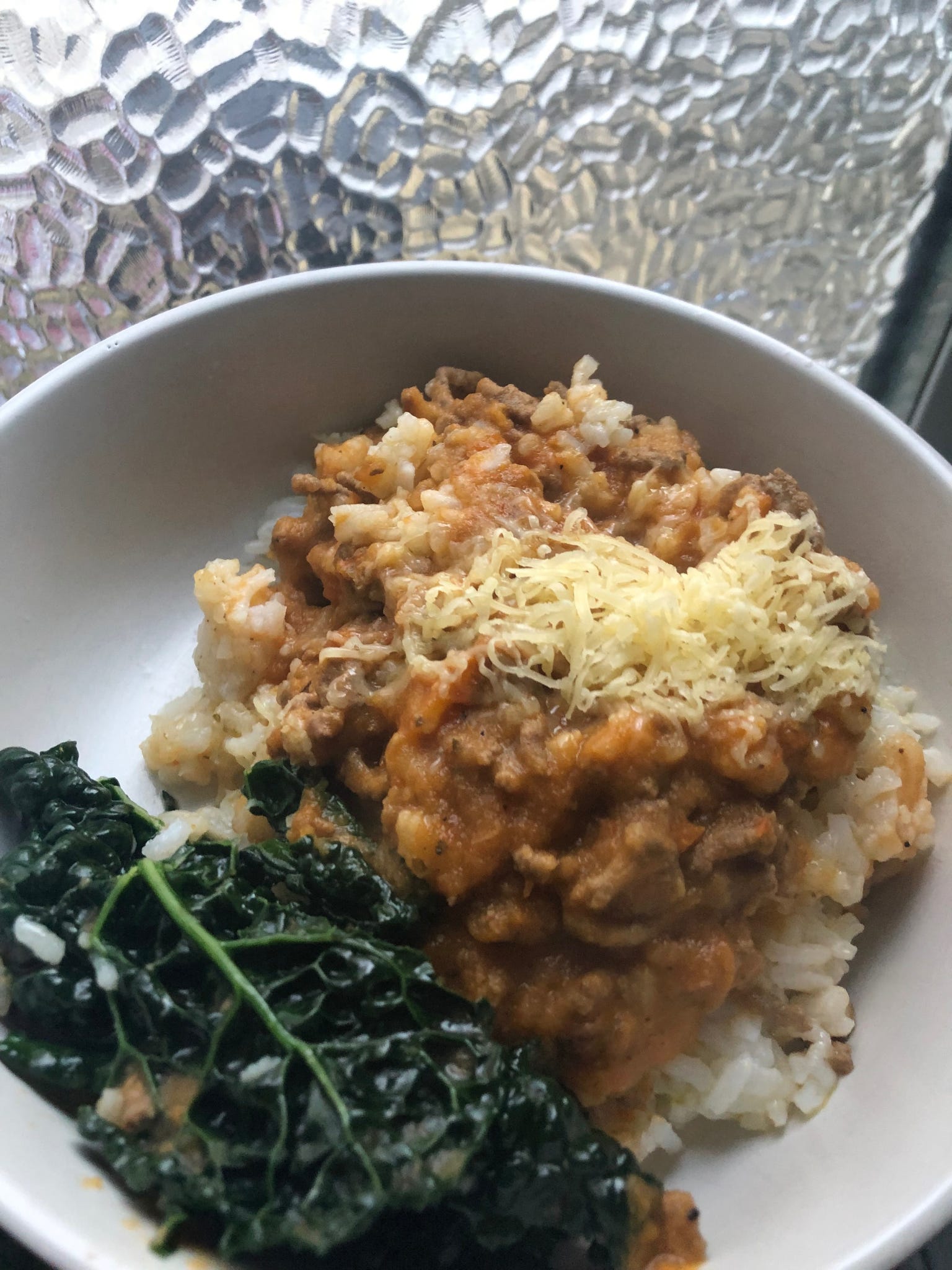
Make a red sauce packed with lots of blended roasted veg (onions, garlic, tomatoes, aubergine, mushrooms, fennel) and mix with lean meat (we like a lean mince beef) - adding it to rice or legume pasta.
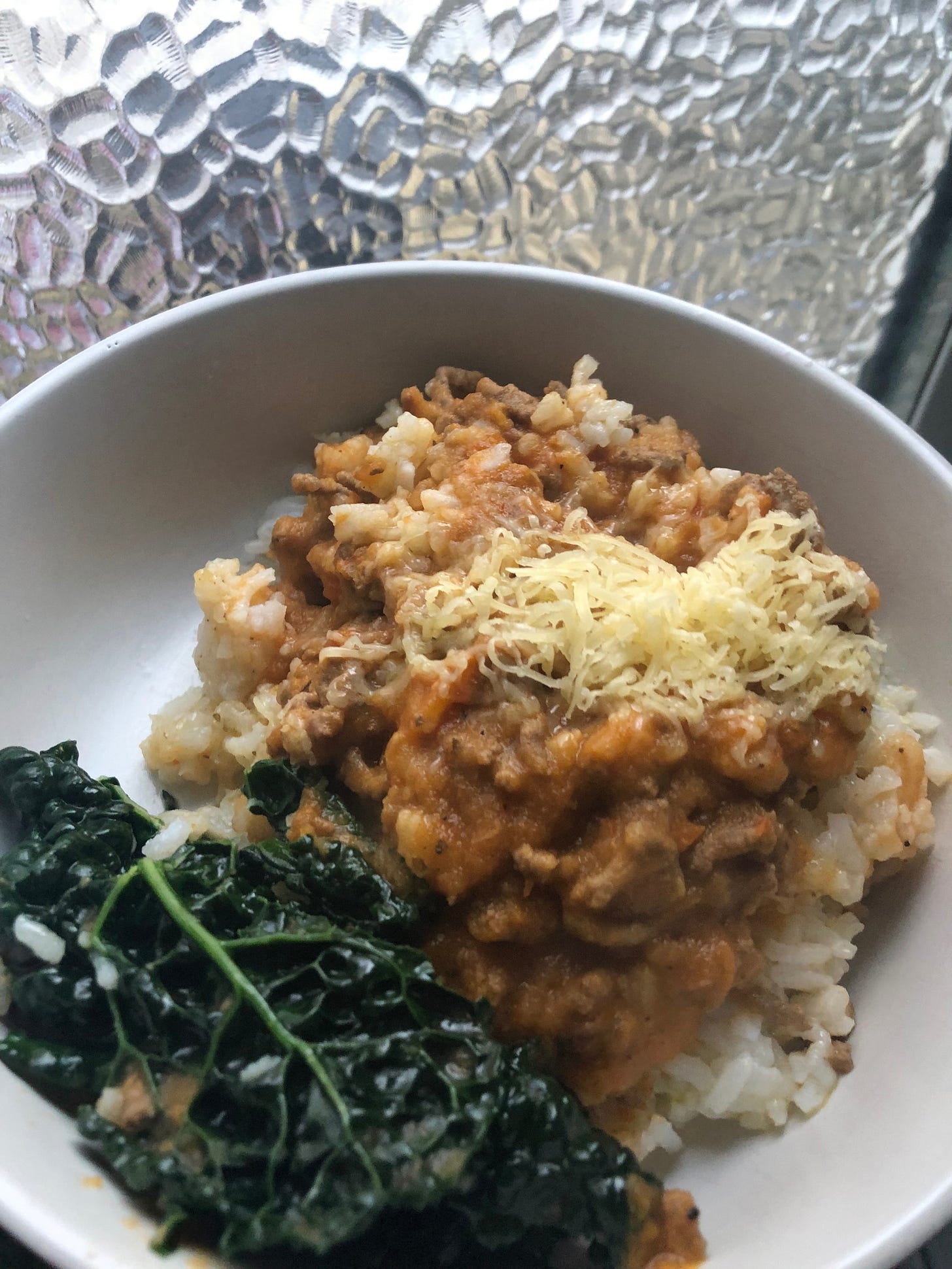
my husband makes us this red veggie sause most weeks - a great thing to prep and then add mince beef/turkey etc, chicken, lentils or chickpeas. On this occasion we added beef with kale on the side.
Get a feel for how much protein is in your typical foods, tweaking amounts slowly if you’d like to increase your protein. A list on protein amounts in common foods is found in Part 1 of the series!
A few meals I like lately with at least 30g protein
Here are some meals I’ve been enjoying. In this list:
I’m not including meals with protein powder, far easier to reach 30g!
Also I’m not including dairy as lots of people struggle with it but if you can enjoy it - things like cottage cheese and Greek yogurt are excellent protein sources and will boost a protein count quickly!
Lots of veggies also contain protein! I haven’t included veggies in the protein count as it’s nice to rotate these.
3 eggs and whatever cooked veg you like (I like mushrooms and onions) , 1/4 cup hummus, 1/4 cup edamame beans and a handful almonds (could always add some toast or a flatbread or sweet potato etc): 33g protein
2 chicken thighs, a herby chimichurri dressing, broccoli and sweet potato - 54g protein
Beef and kidney bean chilli (recipe inspo here) with a side of veg - 33g protein
1 cup cooked red split lentils 17g half a cup of cooked quinoa 4g and a salad/roasted veg with half a cup of roasted chickpeas 7g - 30g protein
1/2 cup tinned tuna mixed with your fav dressing (I make one with olive oil mayo or df yogurt and mustard), onions, any other veg you like (we love adding pickled everything) and 2 tablespoons hemp seeds- added to a flatbread, wrap, or sweet potato with spinach on the side - 30g protein (plus more if you use greek yog in your tuna or have a buckwheat flatbread!)
BUT ARE WE DIGESTING AND ABSORBING IT?
Okay so you’ve got your head around eating a certain amount of protein, but there is no point in putting in all that effort, money and time if you aren’t even absorbing it and reaping the benefits!
If you find that you feel a heaviness in your tummy after eating protein, it might be that you are struggling to digest it. This may be due to your own digestive enzymes or stomach acid.
If you aren’t producing enough stomach acid, a few things could help such as apple cider vinegar before meals and chewing thoroughly. There are some supplements that may help but it’s crucial you have practitioner and doctor supervision for these.
For digestive enzyme support - foods like papaya and pineapple which contain natural enzymes that can help digest protein. There are also digestive enzymes available to buy (protease helps protein digestion).
As always, if you are having any digestive trouble, getting it checked out by your doctor is the first step. Especially before taking any supplements.


There is a myth out there that our body can only absorb 30g of protein at a time. Wrong. We can absorb more but nutrient absorption in general is something that can vary. A few things that can help nutrient absorption are eating slowly, chew thoroughly, staying hydrated, and having something bitter before your meal.
FINAL THOUGHTS
This brings us to the end of the series! I hope it was useful to you. Let me know how you get on with your protein! Big love, Murika x